
How to Choose Your Wedding Flowers: A Complete Guide
20 June 2025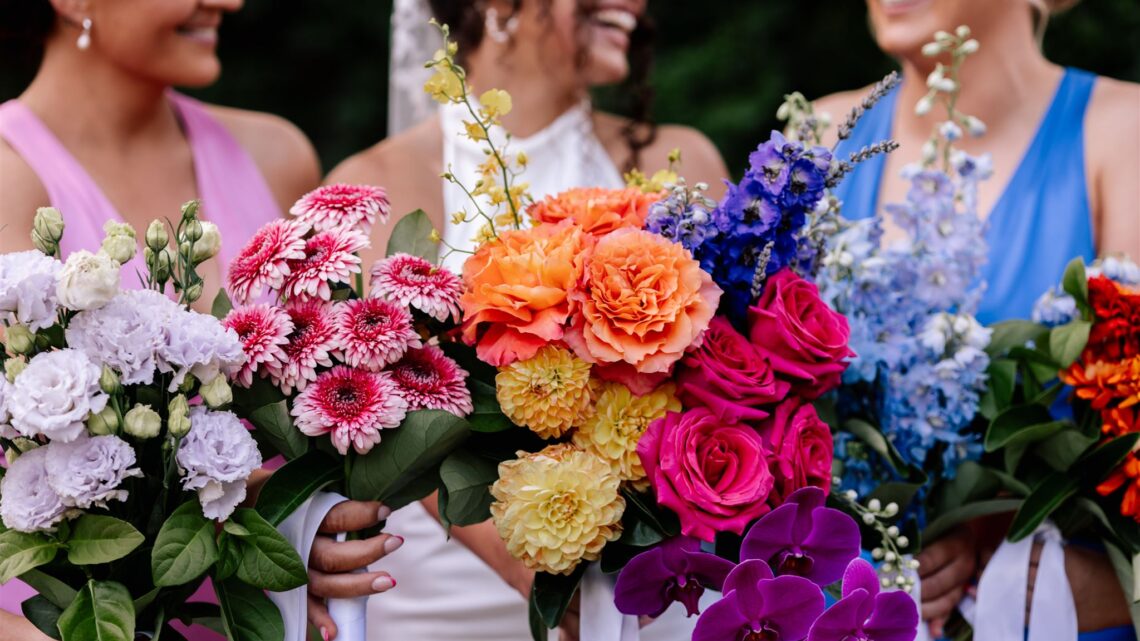
Picking the perfect flowers for your wedding is one of the most exciting (and sometimes challenging) parts of wedding planning. Flowers add colour, life, and beauty to your big day, so making the right choices is crucial in creating the overall aesthetic you desire.
With so many options available – from roses to orchids, and countless colour schemes and floral arrangements – it can be difficult to know where to start.In this comprehensive guide, we’ll break down everything you need to know about picking wedding flowers in 7 sequential steps to make it easy and straightforward for you – from initially identifying your floral style to finally choosing your florist.

Step 1 – Understanding Your Floral Style
The first step in choosing your flowers is understanding your floral style, which will often match the overall theme of your wedding. Are you:
- Romantic: Soft, classic flowers such as roses, peonies, and hydrangeas in soft, pastel colours (pinks, whites, and blush tones)
- Rustic: Wildflowers, greenery, and blooms like sunflowers, daisies, and lavender, often in more muted tones
- Bohemian: A mix of unique and vibrant flowers, like protea, marigolds, and dahlias, often paired with greenery for a free-spirited look
- Modern: Sleek and minimal arrangements using flowers like orchids, calla lilies, and anthuriums in bold, monochromatic colours
- Vintage: Garden roses, sweet peas, and other flowers that evoke a sense of nostalgia, often arranged loosely with vintage accessories like lace and pearls
Take some time to browse wedding magazines, Pinterest, and Instagram for inspiration. This will help you get a feel for what resonates with your style, including whether you’re drawn to minimalist arrangements or lush, abundant blooms.
Step 2 – Work with Your Wedding Colour Palette
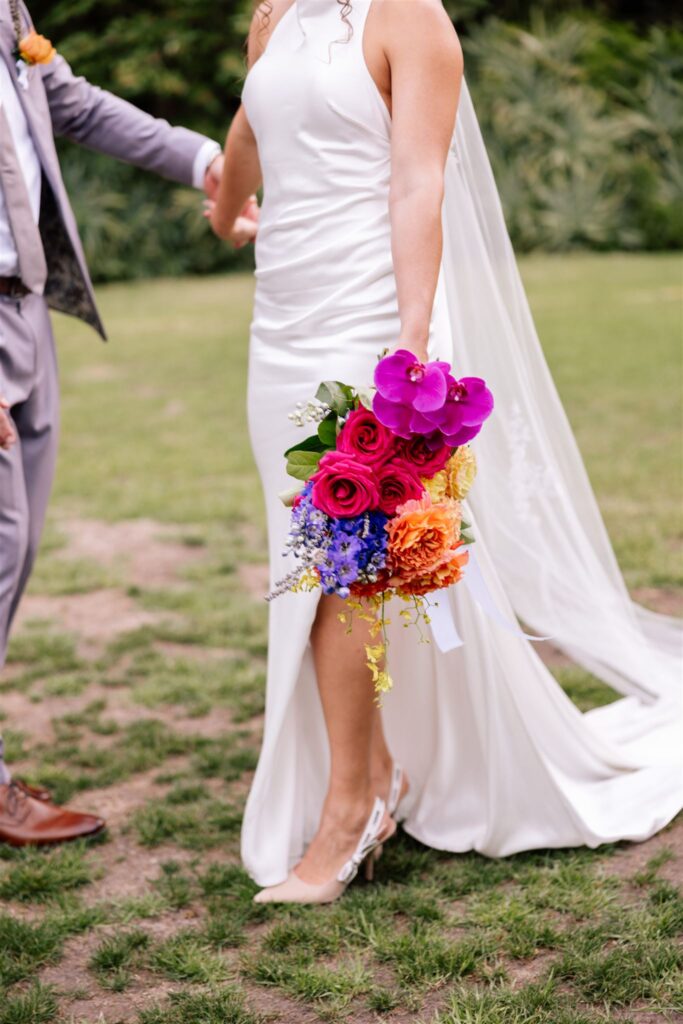
Your intended wedding colour palette significantly influences the flowers you select. Think about your dress and your bridesmaids’ dresses, and how the wedding party’s attire comes together to harmonise with the venue:
Wedding Dresses
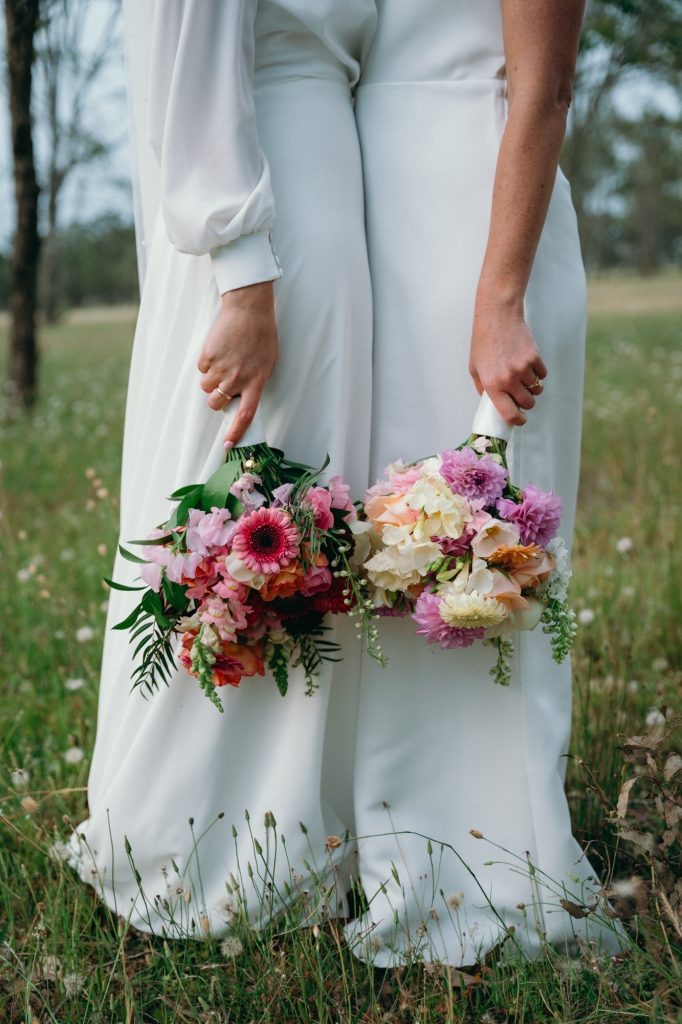
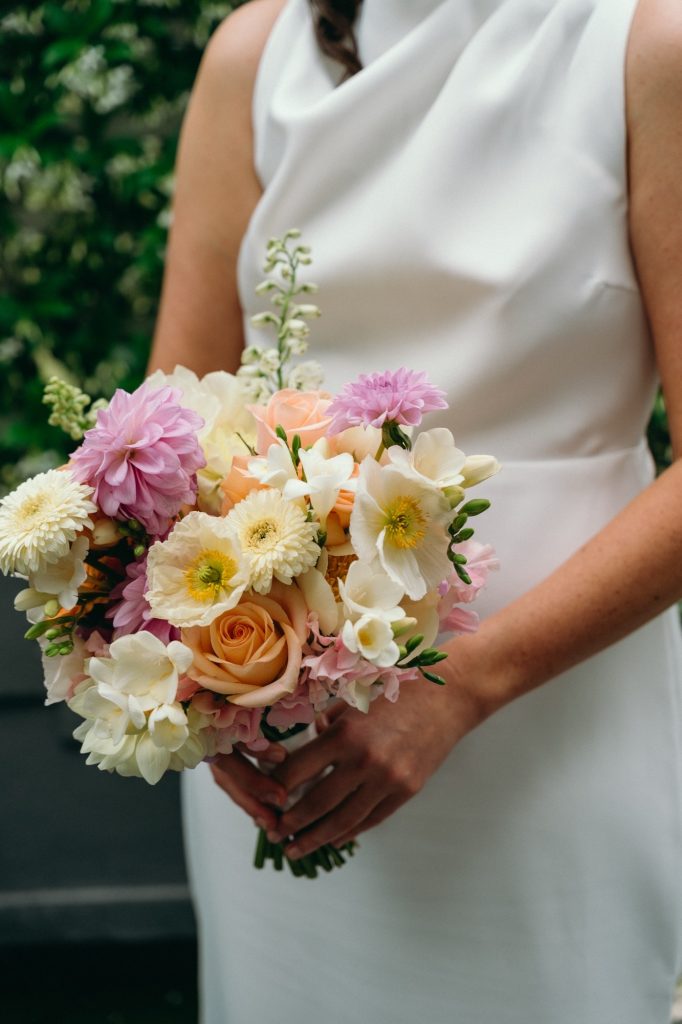
If your gown is ivory, blush, or white, soft pastels like pale pink, lavender, or cream will beautifully enhance the look. For a bold, contemporary dress in deeper colours (such as black or burgundy), consider pairing with vibrant, contrasting blooms like crimson roses or tropical flowers.
Bridesmaids’ Dresses
Contrast arrangements to your bridesmaids’ dresses to make your flowers pop dramatically, or take a monochromatic approach for a unified, sophisticated look.
The Wedding Venue
A rustic barn celebration might call for wildflowers and greenery, while a grand ballroom would shine with opulent flowers like orchids and lilies.
Once you’ve established your colour palette, consult with your florist to select flowers in your desired hues. Some varieties, such as roses and tulips, bloom in nearly every colour, making them wonderfully versatile for matching your theme.
Step 3 – Consider Your Wedding Season
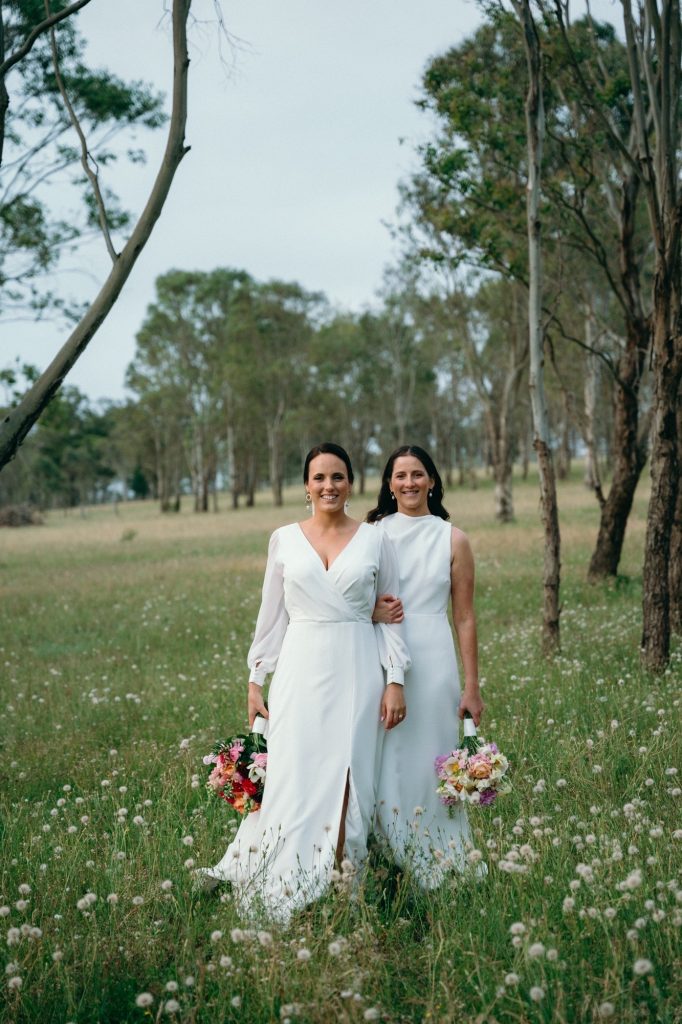
The time of year you’re marrying plays a crucial role in the cost and availability of your wedding flowers. Blooms are seasonal, meaning certain varieties may be more expensive or challenging to source depending on when you choose to hold your wedding celebration.
- SPRING (Sept-Nov): expect delicate blooms like peonies, tulips, and freesias in soft pastels that herald new beginnings
- SUMMER (Dec-Feb): brings bright, cheerful options like sunflowers, hydrangeas, and gerbera daisies that capture the season’s energy
- AUTUMN (Mar-May): offers rich, warm flowers like chrysanthemums, dahlias, and cockscomb, perfect for an earthy colour palette
- WINTER (Jun-Aug): features elegant blooms like amaryllis, camellias, and stunning Australian natives such as banksias and waratahs
Beyond seasonal availability, consider the weather. For outdoor summer celebrations, flowers that withstand heat, like sunflowers and zinnias, are excellent choices. Conversely, delicate blooms like peonies may not endure summer warmth, making them better suited for spring or autumn weddings.
Step 4 – Set Your Budget
A skilled florist can work within your budget and suggest alternatives to help you stay within financial limits while still achieving your desired aesthetic. Remember that choosing wedding flowers encompasses more than bouquets – they include ceremony arrangements, reception centrepieces, aisle decorations, and possibly floral crowns or boutonnières. Here are some tips for budget-friendly wedding flowers:
- Use more greenery: Foliage like eucalyptus, ivy, and ferns can be a cost-effective alternative to expensive blooms while still creating lush, full arrangements
- Choose seasonal flowers: Choosing in-season varieties ensures you’re not paying premium prices for out-of-season blooms
- Repurpose your flowers: Consider using ceremony flowers for reception tables or using bridesmaids’ bouquets as centrepieces
- Highlight focal points: Allocate your budget toward key elements, like your bridal bouquet and ceremony features, while reducing the scale of smaller arrangements
Step 5 – Personalise Your Wedding Flowers
Your wedding flowers can be meaningful, telling a story about your relationship and what matters most to you – whether it’s your favourite blooms, a shared experience, or a colour that says something to you.
Flowers With Meaning
Many flowers carry symbolic meanings you can weave into your arrangements. Lavender symbolises devotion, while ivy represents fidelity. Roses embody love and passion, and lilies are often associated with purity and commitment.
Family Heirlooms
If your family has traditions involving certain flowers or greenery, incorporating them can resonate deeply. Some brides add heirloom brooches or jewellery into their bouquet for added sentiment.
Cultural Flowers
If cultural heritage is important to you, selecting flowers tied to that culture makes your arrangements more meaningful. Orchids might suit an Asian-themed wedding, while marigolds could be perfect for celebrations inspired by Mexican traditions.
Step 6 – Types of Wedding Floral Arrangements
Wedding flowers appear in many forms, with each type serving its own special purpose for your wedding party and celebration.
Bridal Bouquet
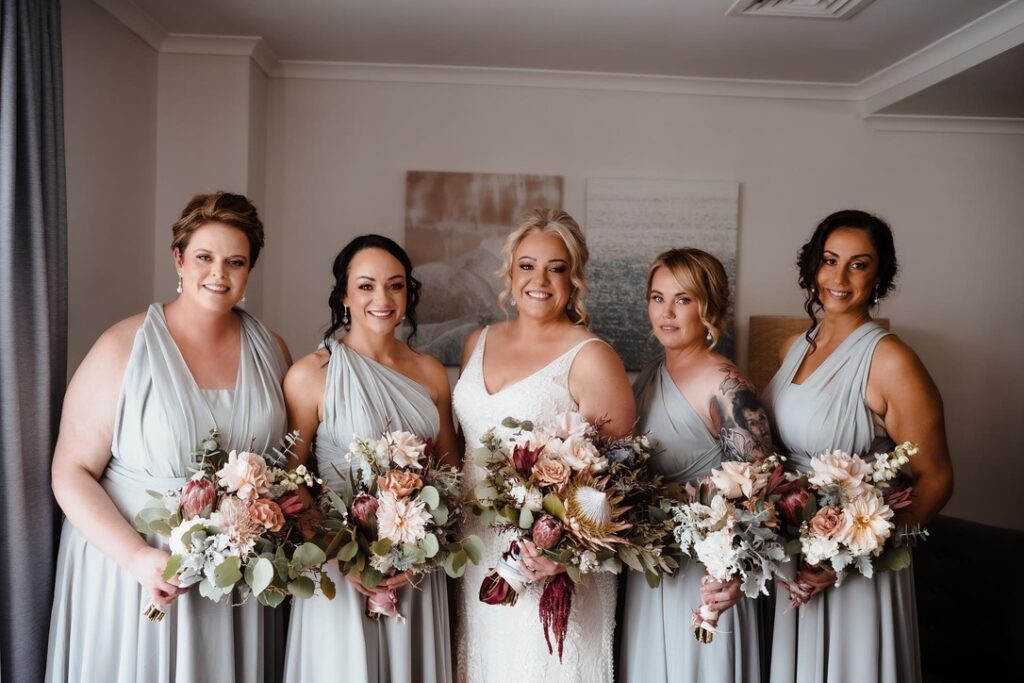
Whether round and compact, or cascading and or free-form, consider using the same flowers as your bridesmaids’ bouquets in your bridal bouquet or choose something distinct to make yours stand out.
Bridesmaids’ Bouquets
Typically smaller, simpler versions of the showpiece bridal bouquet, with a slightly different design or flower variation to distinguish them.
Boutonnieres
Smaller floral arrangements worn by the groom, groomsmen, and close family members on their lapel. Classic boutonniere choices include roses, baby’s breath, or sprigs of greenery.
Ceremony Arrangements
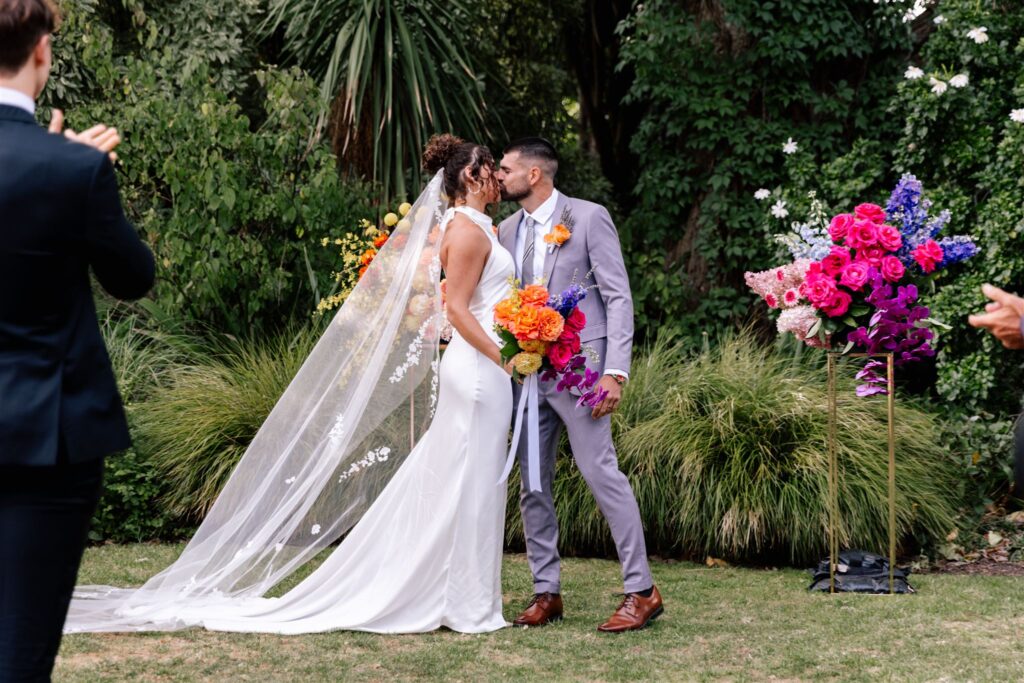
Altar arrangements, flower arches, arbours, plinth arrangements, flower meadows, or aisle flowers. These can be lavish and grand or simple and understated, depending on your style. Flowers lining the aisle create a magical, romantic atmosphere.
Reception Centrepieces
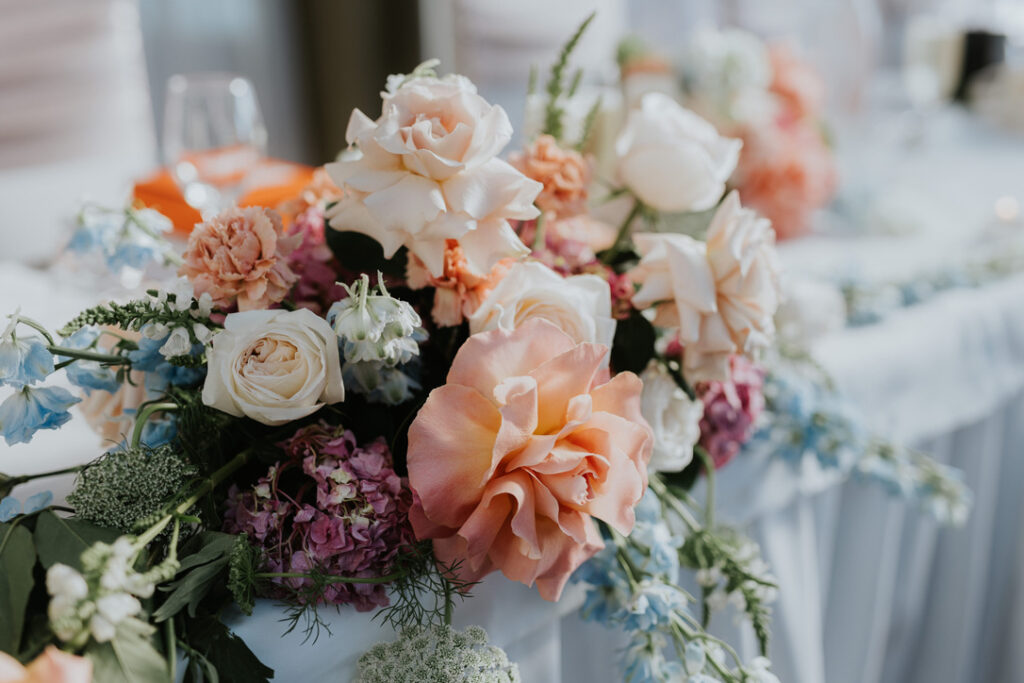
Table centrepieces are the most visible floral elements at your reception. These arrangements can be tall or low, depending on your table settings. Consider using various flowers, such as hydrangeas, roses, or lilies, paired with candles for a soft, romantic ambience. Bud vases, compote arrangements, low bowl designs, and high centrepieces on table plinths are all options worth exploring.

Step 7 – Choosing a Florist and Planning Your Floral Design
You’ve determined your style, colour palette, budget, and a wish-list of flowers for your wedding. Now it’s time to collaborate with a florist! Here’s how to find the right florist who can make your dream a reality:
- Research: Read reviews and ask for recommendations from friends or wedding planners
- Consultations: Meet with florists in person to discuss your ideas and share your vision. Bring images, colour swatches, and a list of desired flowers
- Trust their expertise: Florists have extensive experience in design, availability, and seasonal blooms. They can guide you in selecting the best flowers based on your preferences and budget
- Visit their shop: If possible, visit their studio to view arrangements in person and get a sense of their style
It’s best to start discussing wedding flowers with your florist 6-9 months before your wedding to allow for thorough planning and flower sourcing. This gives you ample time to select the flowers you love and finalise your design details.
Your florist should handle all flower logistics in the lead-up to your wedding celebration, with flowers typically delivered in the wedding morning so the blooms are as fresh and gorgeous as they can be across your special day.
Remember, a good wedding florist will have no trouble taking care of all these little details for you, giving you time to ‘smell the roses’ and enjoy every step of your wedding journey.
Ready to start picking wedding flowers? We’re here to help make your fairytale wedding dreams come true.